Abstract
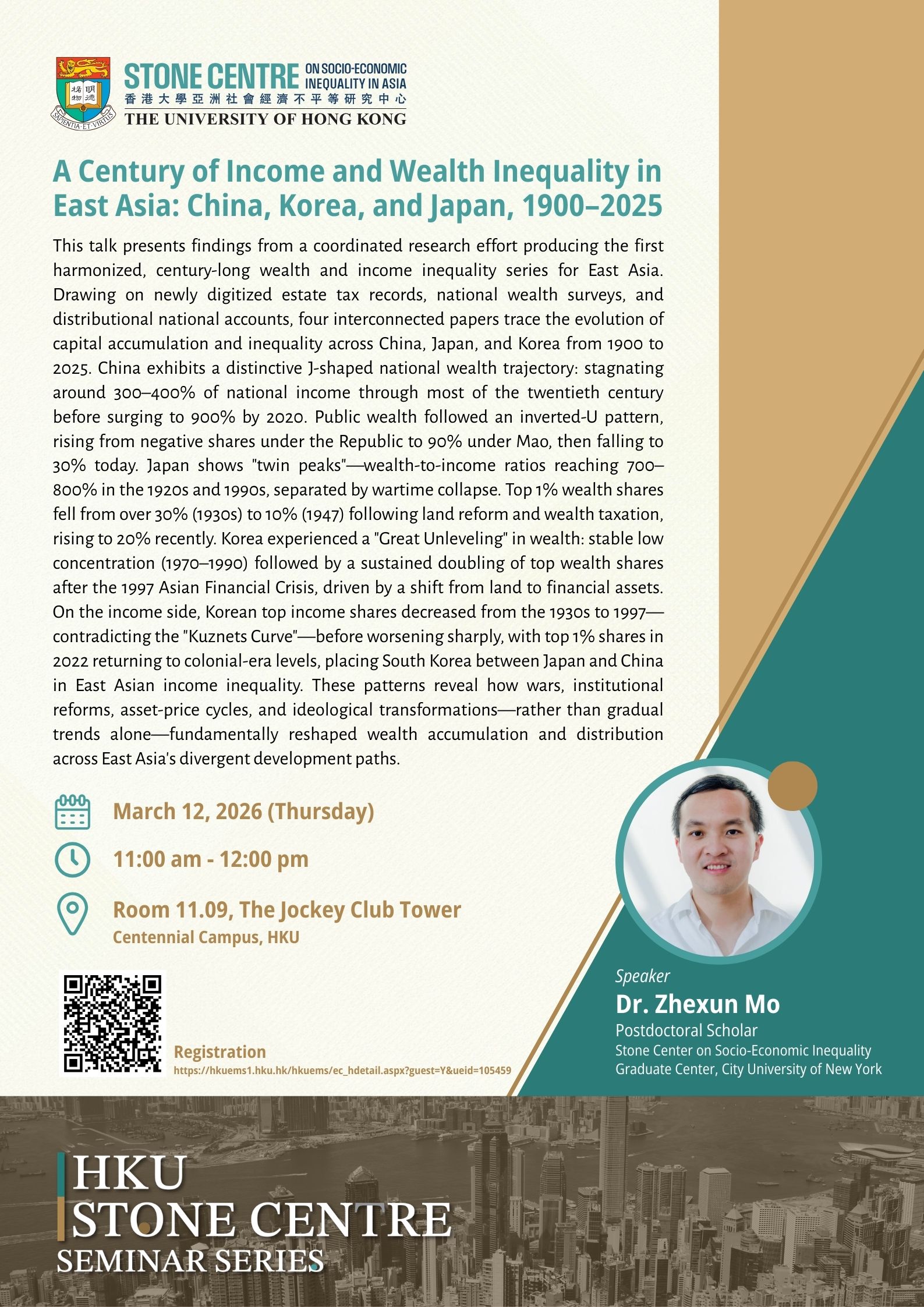
This talk presents findings from a coordinated research effort producing the first harmonized, century-long wealth and income inequality series for East Asia. Drawing on newly digitized estate tax records, national wealth surveys, and distributional national accounts, four interconnected papers trace the evolution of capital accumulation and inequality across China, Japan, and Korea from 1900 to 2025. China exhibits a distinctive J-shaped national wealth trajectory: stagnating around 300–400% of national income through most of the twentieth century before surging to 900% by 2020. Public wealth followed an inverted-U pattern, rising from negative shares under the Republic to 90% under Mao, then falling to 30% today. Japan shows “twin peaks”—wealth-to-income ratios reaching 700–800% in the 1920s and 1990s, separated by wartime collapse. Top 1% wealth shares fell from over 30% (1930s) to 10% (1947) following land reform and wealth taxation, rising to 20% recently. Korea experienced a “Great Unleveling” in wealth: stable low concentration (1970–1990) followed by a sustained doubling of top wealth shares after the 1997 Asian Financial Crisis, driven by a shift from land to financial assets. On the income side, Korean top income shares decreased from the 1930s to 1997—contradicting the “Kuznets Curve”—before worsening sharply, with top 1% shares in 2022 returning to colonial-era levels, placing South Korea between Japan and China in East Asian income inequality. These patterns reveal how wars, institutional reforms, asset-price cycles, and ideological transformations—rather than gradual trends alone—fundamentally reshaped wealth accumulation and distribution across East Asia’s divergent development paths.
About the Speaker
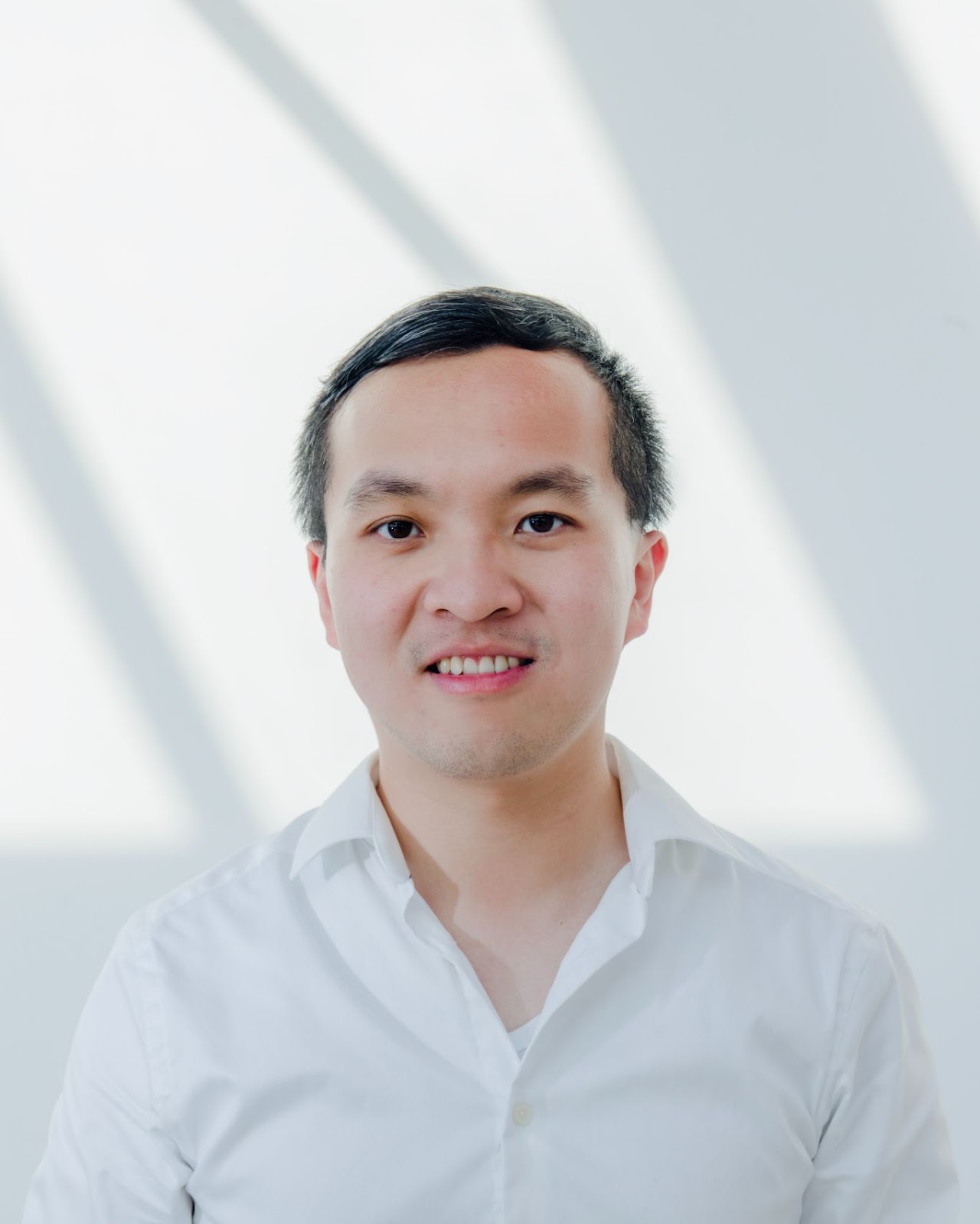
Zhexun Mo is an economist whose research lies at the intersection of political economy, public economics, development economics, and economic history, with a focus on the long-run dynamics of inequality and development. He is currently a post-doctoral scholar at the Stone Center on Socio-Economic Inequality at the Graduate Center of the City University of New York, and East Asia Coordinator for the World Inequality Lab. His work examines how political and institutional forces shape income, wealth, and human capital inequalities over time, including the legacy of colonial conscription and forced labor in Africa, the historical measurement of income and wealth inequality in East Asia, and the cultural determinants of redistributive preferences in China and France. He has published in the European Journal of Political Economy and the Journal of Public Economics. He received his Ph.D. in Economics from the Paris School of Economics in 2024 and will join the Department of Economics at Université Laval (Québec, Canada) as a tenure-track Assistant Professor starting in June 2026.