Abstract
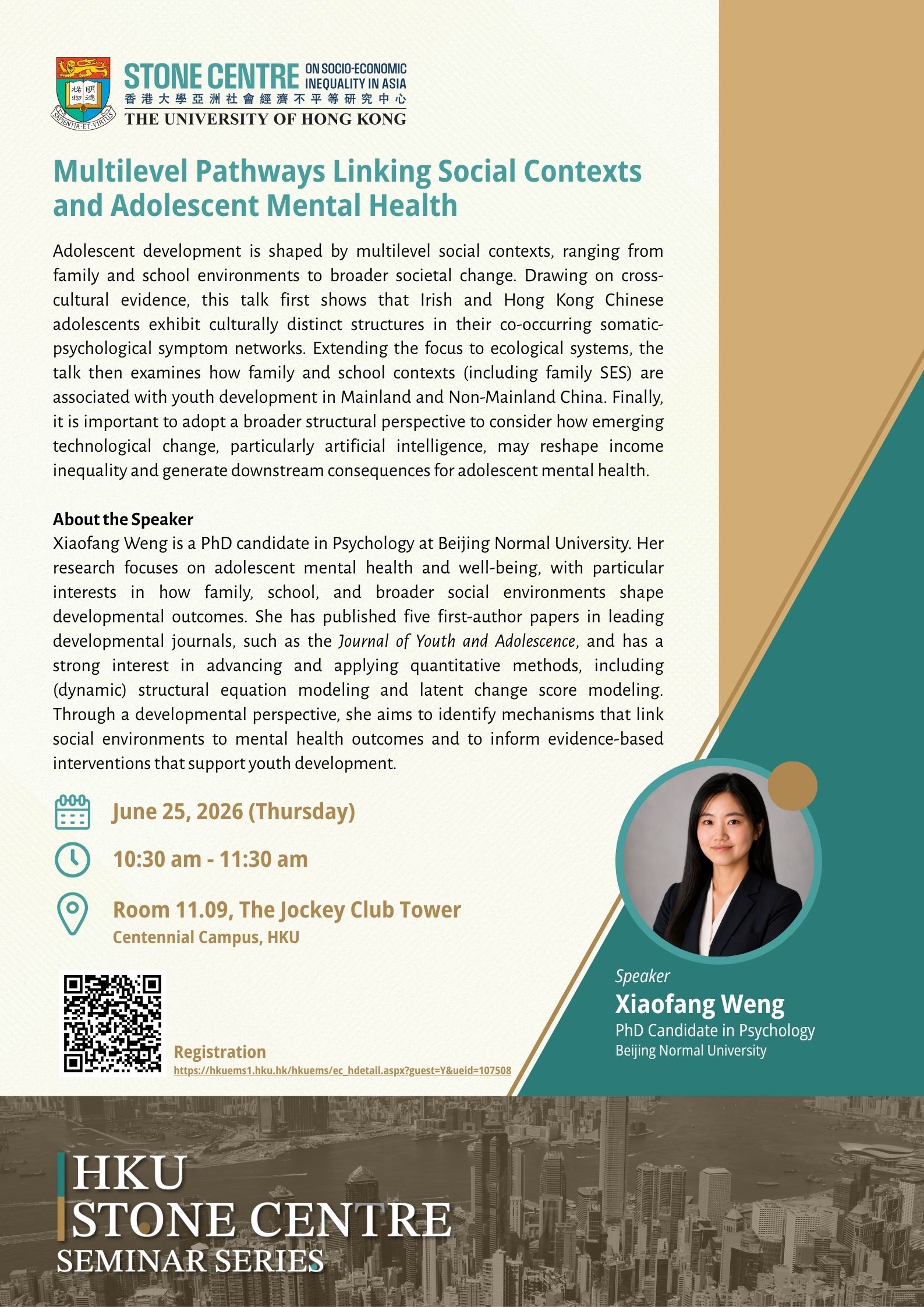
Adolescent development is shaped by multilevel social contexts, ranging from family and school environments to broader societal change. Drawing on cross-cultural evidence, this talk first shows that Irish and Hong Kong Chinese adolescents exhibit culturally distinct structures in their co-occurring somatic-psychological symptom networks. Extending the focus to ecological systems, the talk then examines how family and school contexts (including family SES) are associated with youth development in Mainland and Non-Mainland China. Finally, it is important to adopt a broader structural perspective to consider how emerging technological change, particularly artificial intelligence, may reshape income inequality and generate downstream consequences for adolescent mental health.
About the Speaker
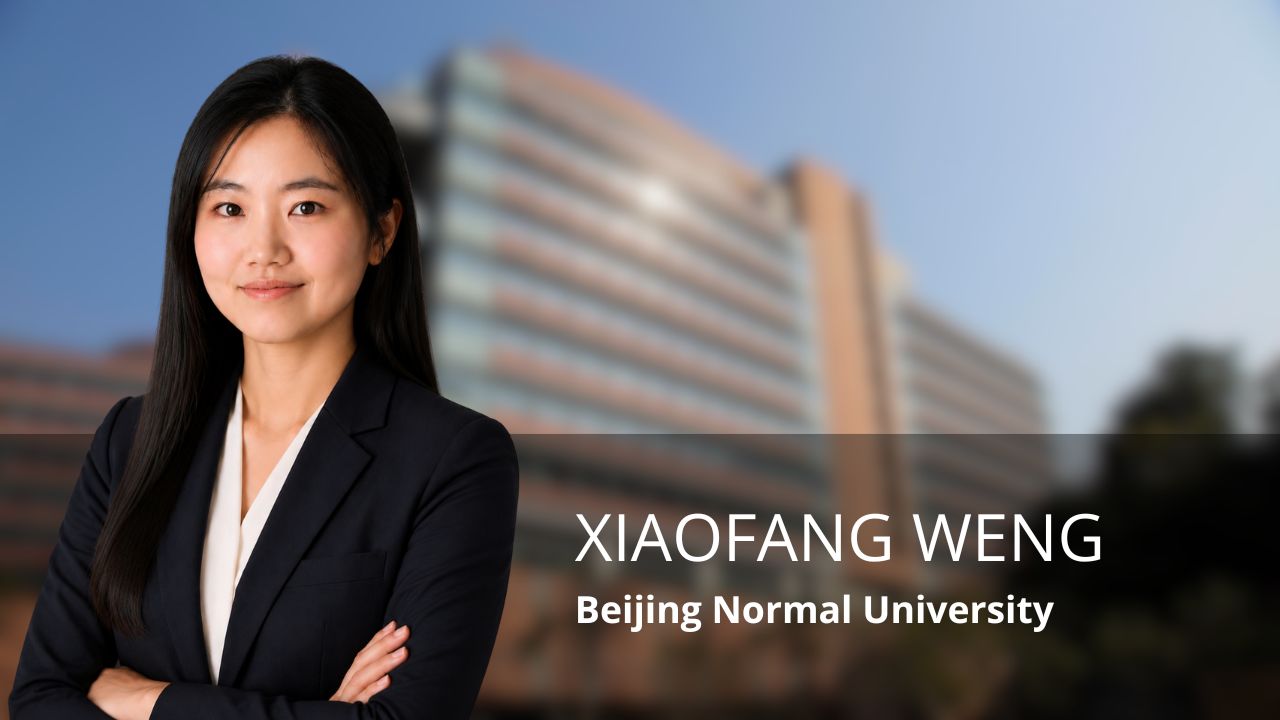
Xiaofang Weng is a PhD candidate in Psychology at Beijing Normal University. Her research focuses on adolescent mental health and well-being, with particular interests in how family, school, and broader social environments shape developmental outcomes. She has published five first-author papers in leading developmental journals, such as the Journal of Youth and Adolescence, and has a strong interest in advancing and applying quantitative methods, including (dynamic) structural equation modeling and latent change score modeling. Through a developmental perspective, she aims to identify mechanisms that link social environments to mental health outcomes and to inform evidence-based interventions that support youth development